Join the Blanchard Team..
Apply Now
Join the Blanchard Team..
Apply Now

Choosing between renting vs. buying power equipment is a major decision for any business in construction, landscaping or other heavy industries. With the equipment-as-a-service (EaaS) model on the rise and both options offering unique advantages, it’s important to weigh your business’s needs, project requirements and long-term goals before making a choice. This guide will walk you through the key factors to consider so you can make the most cost-effective and practical decision for your business.
As you start to decide whether renting vs. buying power machinery is best for your operations, assess your specific equipment needs. Consider the types of projects you handle, the power requirements for your tasks and any specialized features you’ll likely need.
Matching the right equipment to your operational demands translates to efficiency and safety on the jobsite. Do your projects demand the latest technology, advanced safety features or specialized attachments, and how often are these needs likely to change? Will you need the same type of equipment for ongoing projects or short-term rentals for seasonal jobs?
The size and capacity of your equipment should align with the scale and complexity of your projects. Renting power equipment versus buying can give you access to a wide variety of equipment sizes and models, allowing you to select the best fit for each job. On the other hand, buying can be preferable if you consistently use equipment of a certain size or capacity.
Customization is also a factor — owning equipment allows for upgrades and modifications specific to your business, while renting offers flexibility to switch between different types as the nature of projects fluctuates or your business needs change. Having access to the best power equipment on the market can be a key differentiator for a business and directly affect profitability.
Cost is often a deciding factor. Renting vs. buying power equipment typically requires lower upfront costs, making it attractive for businesses with limited capital or those looking to preserve cash flow. It also converts fixed costs into variable expenses, which can be helpful for managing budgets on a project-by-project basis.
Buying, on the other hand, is a long-term investment that can add value to your business over time. The main benefit of buying vs. renting power equipment is your asset register. While purchasing power machinery is a long-term investment, if your business has longevity, it will increase the value of your company, providing a level of security and stability. In difficult times, its sale can be used to generate income. Investing in power equipment also helps companies get access to credit, which is essential for growth.
The purchase of used equipment is an opportunity for companies to compromise on cost between renting and buying power machinery. Businesses can buy high-grade power equipment at a lower upfront price and still benefit from excellent performance. For example, Cat® Certified Used equipment has passed a rigorous 140-point inspection to make sure it has no quality or reliability issues. The standards that Cat equipment must meet to become certified include:
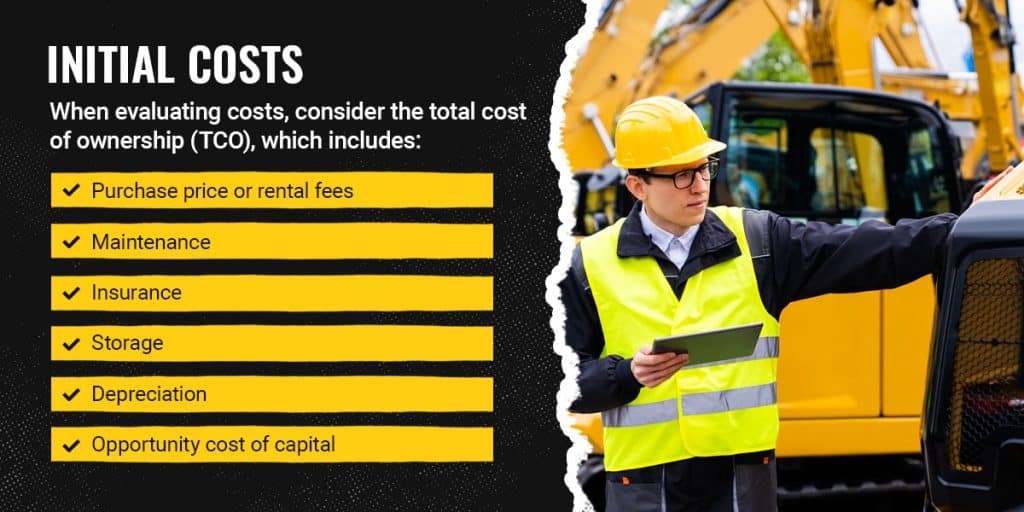
When evaluating costs, consider the total cost of ownership (TCO), which includes purchase price or rental fees, maintenance, insurance, storage, depreciation and the opportunity cost of capital. You can also speak with the company’s equipment financing department when comparing the rental and purchase of power equipment to find the best option for your unique situation.
Maintenance is another important consideration. Renting power equipment versus buying often means the rental provider handles maintenance, repairs and compliance. This reduces your administrative burden and minimizes downtime, which can be especially beneficial for businesses that lack in-house maintenance resources. When you buy equipment, you take on full responsibility for upkeep, repairs and ensuring compliance with safety regulations. While this gives you more control, it also demands time, expertise and additional costs for storage and insurance.
You will also need to consider unexpected breakdowns, which the owner is fully responsible for and can lead to downtime and expenses. Equipment management will incur additional administrative costs in scheduling maintenance, managing insurance, and complying with safety regulations.
If choosing to buy machinery, you can mitigate the risk of breakdowns and repairs by using field maintenance and repair services. This allows your equipment to receive professional repair without having to leave the jobsite or interrupt productivity.
How often you use power equipment should guide your decision. Renting is ideal for short-term, seasonal or fluctuating needs. It allows you to scale your fleet up or down depending on project demand. It’s also a good option for trying out new technology or handling specialized tasks. Buying makes sense for equipment that is used often and consistently, and where the requirements of projects are unlikely to change. In this case, the cost per use decreases over time and you’re able to build equity in your assets. Keep in mind that underutilized owned equipment can lead to higher costs and lower returns on investment.
There’s no one-size-fits-all answer — both renting vs. buying power machinery have their place in a well-run business. Consider renting if:
Choose to buy if:
Industry trends show a growing preference for rental due to flexibility and access to new technology, but ownership remains a strong choice for businesses with steady, ongoing equipment needs. When weighing the benefits of renting vs. buying power equipment, sustainability goals, operational flexibility and financial strategy all play a role in the decision.
Whether renting or buying, you’ll need a reputable dealer with years of experience. We provide high-quality rental equipment, and we can also help you find the best deals on new and used heavy equipment sales. Our team will assist you in making a wise investment that will serve your needs in the future.
Whatever your decision, you can rely on us to meet all your equipment needs for different sectors, including construction, landscaping and mining. Find a location near you or contact our team today to learn how we can help you meet your project requirements.